
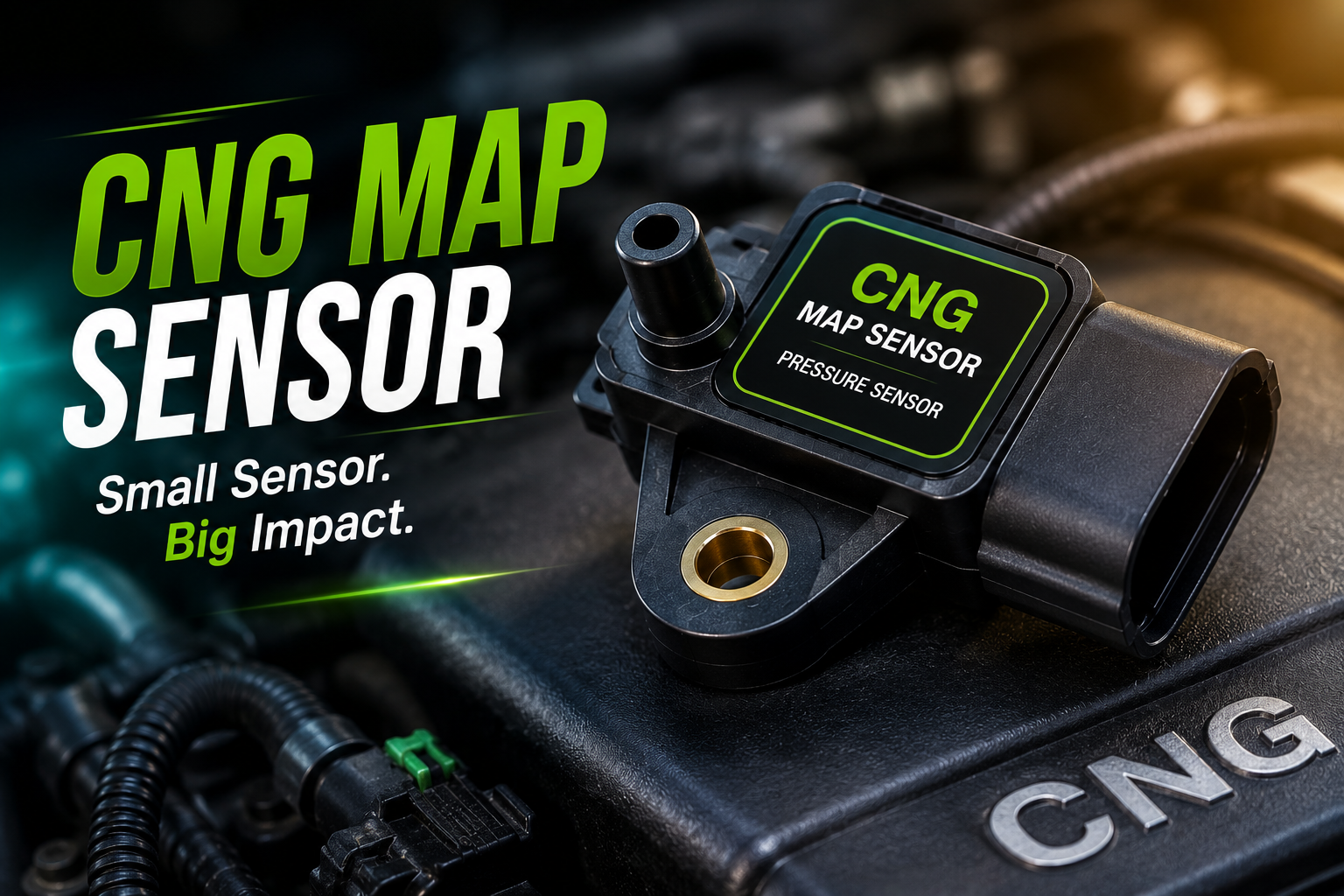
Quick Summary: A faulty CNG MAP Sensor typically causes rough engine idling, poor acceleration, sudden engine stalling, and reduced fuel efficiency. You can confirm a failure by checking error codes using an OBD-II scanner or testing the sensor’s signal voltage with a multimeter.
Key Symptoms of a Faulty CNG MAP Sensor
Recognizing the primary warning signs of a failing CNG MAP Sensor early prevents severe engine hesitation and unexpected performance drops during daily travel.
- Rough Idling: Unstable pressure numbers shake the engine while waiting at red lights.
- Poor Acceleration: The car hesitates badly when pressing the pedal hard.
- Engine Hesitation: Power delivery stumbles during smooth gear shifts.
- Increased Fuel Consumption: Incorrect MAP sensor readings can lead to an improper air-fuel mixture, reducing fuel efficiency.
- Check Engine Light: The Check Engine Light may illuminate if the ECU detects abnormal MAP sensor readings.
Why Check Your CNG MAP Sensor Early?
Early diagnosis helps identify wiring faults, contamination, or CNG MAP Sensor failure before they lead to poor engine performance or unnecessary part replacement. Faulty MAP sensor readings cause the ECU to calculate incorrect air pressure values, which can affect air-fuel mixture, engine performance, and fuel efficiency.
Common Causes of CNG MAP Sensor Failure
| Cause | Possible Effect |
| Oil contamination | Incorrect pressure readings |
| Loose wiring | Intermittent sensor signals |
| Moisture ingress | Sensor malfunction |
| Vacuum leak | Incorrect MAP readings |
CNG Troubleshooting Steps and Diagnostics
- Inspect Wiring Harness: Look for frayed wires or burnt plastic connectors near the intake manifold.
- Clean Inlet Port: Use an electrical contact spray to remove oil film blocking the hole.
- Check ECU Data: Use an OBD II scan tool or compatible diagnostic equipment.
- Replace Unit: Replace the CNG MAP Sensor only after confirming the fault through proper diagnostics.
How to Test a CNG MAP Sensor Using a Multimeter
| Testing Step | What to Check | Typical Reading |
| Ground Wire | Continuity & Resistance | Less than 0.5 Ω |
| Power Supply | Reference Voltage | Around 5 V |
| Signal Output | Voltage Change | About 0.5 V at idle to 4.5 V at wide open throttle |
| Diagnostic Scan | Live MAP Values | Should match engine operating conditions |
What Causes Sensor Failure and Poor Performance?
Expert Insight: Diagnostic checks often reveal that incorrect CNG MAP Sensor readings are one of the most common causes of rough idling and poor throttle response. Confirming the fault with diagnostic equipment before replacing the part helps avoid unnecessary repairs. Oil buildup and loose wiring connectors can reduce component accuracy over time, directly impacting overall reliability.
Always confirm a faulty MAP sensor through diagnostic testing before replacing it, as similar symptoms can also result from wiring faults, vacuum leaks, or ECU-related issues.
Checklist Before Replacing a CNG MAP Sensor
- Verify ECU error codes.
- Check wiring and connectors.
- Inspect vacuum hoses.
- Confirm component compatibility.
- Choose an approved replacement part.
Official Note: Always use a CNG MAP Sensor that is compatible with your vehicle and CNG system. Follow the manufacturer’s installation and calibration recommendations.
How Can You Prevent CNG MAP Sensor Failure?
Regular preventive maintenance helps extend the life of your CNG MAP Sensor and reduces the risk of unexpected engine performance issues.
- Follow the manufacturer’s recommended service schedule.
- Use clean, high-quality CNG from reliable fuel stations whenever possible.
- Inspect wiring connectors and vacuum hoses during routine servicing.
- Keep the intake system clean to reduce contamination around the sensor.
- Replace damaged or worn components promptly using compatible, approved parts.
- Diagnose warning lights early instead of waiting for performance issues to worsen.
CNG MAP Sensor Replacement Cost in India (2026)
Replacing a broken unit requires buying a compatible replacement from an authorized dealer. Prices remain affordable compared to full engine repairs.
| Replacement Part | Estimated Price Range |
| CNG MAP Sensor | ₹1,500 to ₹3,500 |
| Professional Diagnostic Check | ₹300 to ₹800 |
| Wiring Repair Labor | ₹500 to ₹1,000 |
Note: Estimated prices may vary depending on the vehicle model, CNG kit brand, location, and labour charges.
Common Mistakes During Sensor Checks
- Ignoring Minor Hesitation: Waiting until the car completely dies before testing voltage.
- Using Cheap Duplicates: Buying unbranded parts that give false pressure readings to the ECU.
- Skipping Terminal Cleaning: Plugging new units onto corroded wire pins without cleaning them first.
- Forgetting Vacuum Leaks: Blaming the part when a cracked vacuum hose causes the pressure drop.
Looking for genuine CNG parts? Click here to explore our CNG Reducers, CNG ECU, CNG Injectors, CNG Filters, CNG Filling Valves, CNG MAP Sensors, and other high-quality CNG components for reliable vehicle performance.
Final Recommendation
Fixing pressure sensor issues requires careful testing of electrical signals before buying new parts. Comparing quality replacement components and understanding the right hardware options ensures your vehicle runs smoothly on every trip.
Follow us on Facebook and Instagram for expert CNG and LPG maintenance tips, troubleshooting guides, product updates, and the latest vehicle care insights.
Frequently Asked Questions
1. How can you tell if a CNG MAP Sensor is faulty?
Common signs include rough idling, hesitation, poor acceleration, reduced fuel efficiency, and a check engine light. Proper diagnosis is required to confirm a faulty CNG MAP Sensor.
2. Can a bad sensor ruin engine mileage?
Incorrect sensor readings can affect the air-fuel mixture, reducing fuel efficiency and engine performance.
3. How often should sensors be cleaned?
Inspect the sensor during scheduled servicing. Clean or replace it only if contamination is found or the manufacturer recommends it.
4. Do faulty sensors trigger dashboard lights?
Wrong voltage signals may trigger check engine warnings on the car’s instrument cluster.
5. Can I drive with a faulty MAP Sensor?
Driving with a faulty MAP Sensor is not recommended because incorrect pressure readings can reduce engine performance, increase fuel consumption, and lead to unexpected stalling. Diagnose and repair the issue as soon as possible.
### Official Technical Assistance
Need Professional CNG MAP Sensor Assistance? Contact us for compatibility checks, professional diagnostics, sensor replacement guidance, and installation support at (+91 981016047)